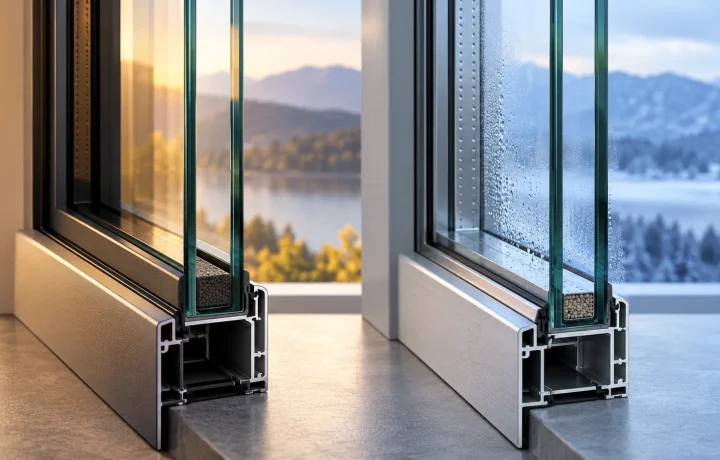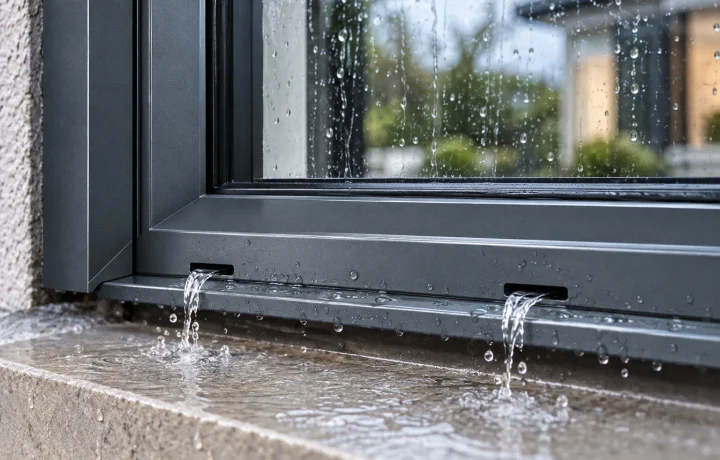
The third pane improves thermal performance, but pane count alone does not tell you how good a window is. Low-E coatings, gas fills, spacers, frame construction, air sealing, orientation, installation quality, and even the size of the window can have as much influence on real-world comfort as the difference between two and three panes.
There is another important exception: triple-pane glazing is not automatically the best choice for noise reduction. If traffic, aircraft, or other exterior noise is the problem you are trying to solve, glass thickness, laminated glass, cavity design, and the acoustic performance of the complete window may matter more than simply adding another pane.
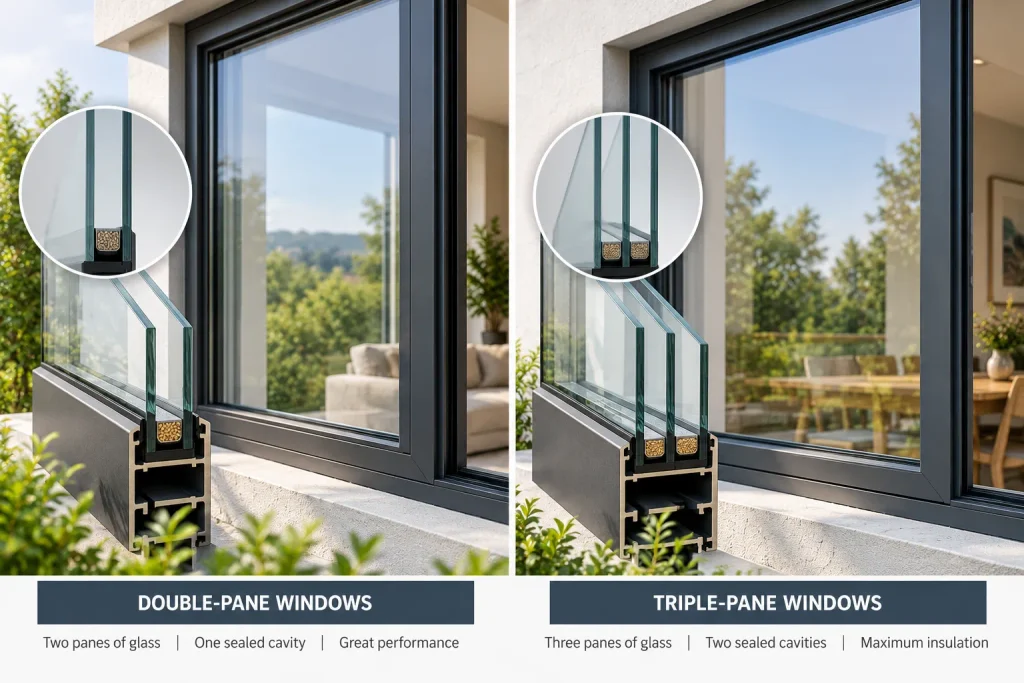
Double-Pane vs Triple-Pane Windows: Quick Comparison
| Factor | Double-Pane Windows | Triple-Pane Windows |
|---|---|---|
| Glass layers | 2 | 3 |
| Sealed cavities | 1 | 2 |
| Thermal insulation | Very good with the right specification | Better when compared like for like |
| Interior glass temperature in winter | Lower | Typically warmer |
| Condensation resistance | Good | Generally better |
| Weight | Lower | Higher |
| Frame requirements | Compatible with a wide range of systems | May require a frame designed for thicker, heavier glazing |
| Natural light | Usually slightly higher | May be slightly lower depending on coatings and glass |
| Sound control | Can be excellent with the right glass build-up | Can be better, but not automatically |
| Initial cost | Usually lower | Usually higher |
| Best fit | Moderate climates and value-focused projects | Cold climates, high-performance homes, large glazed areas, and comfort-focused projects |
The comparison only works when the two windows are otherwise similar. A premium double-pane unit with an efficient frame and carefully selected Low-E glass can outperform a basic triple-pane configuration in areas where pane count is not the deciding factor.
What Is the Difference Between Double-Pane and Triple-Pane Windows?
A double-pane window, also called double glazing or a double-glazed window, contains two panes of glass separated by a sealed cavity.
A triple-pane window, also called triple glazing, adds a third pane and creates two sealed cavities.
These assemblies are known as insulating glass units (IGUs).
The cavities are not simply empty spaces. They are sealed during manufacturing and may contain air or an insulating gas such as argon. Krypton may also be used in some high-performance systems, particularly where narrower cavities are required.
A spacer separates the panes around the perimeter, while sealants help maintain the integrity of the insulated glass unit.
Adding a third pane therefore does more than add another sheet of glass. It creates:
- One additional glass layer
- A second insulating cavity
- Additional surfaces where suitable Low-E coatings may be applied
- A thicker and heavier insulating glass unit
Those changes can reduce heat transfer, but they also affect weight, frame design, cost, visible light transmission, and the range of window systems that can accept the glazing.
Is Triple-Pane More Energy Efficient Than Double-Pane?
Yes. When comparable windows are evaluated under the same conditions, triple-pane glazing can achieve a lower U-factor than double-pane glazing.
U-factor—or U-value in many markets—measures the rate at which heat passes through a window. Lower is better.
The underlying principle can be represented simply as:
Heat flow ≈ U-value × window area × temperature difference
If two windows cover the same area and experience the same indoor-to-outdoor temperature difference, the window with the lower U-value transfers less heat.
Triple glazing gains an advantage because the third pane creates another insulating cavity. But this does not mean you should choose a window based on the words “triple-pane” alone.
Compare the Whole-Window U-Factor
One of the most common mistakes is comparing the performance of the glass alone.
The glazing edge, spacer, sash, frame, reinforcement, seals, and other components all affect heat transfer. Ask for the whole-window U-factor or U-value, not only a center-of-glass figure.
This becomes particularly important with conductive frame materials.
For example, choosing triple glazing does not automatically compensate for a poorly insulated frame. In aluminum windows, the design and effectiveness of the thermal break can materially affect overall performance.
Likewise, vinyl or uPVC windows can vary in frame depth, chamber design, reinforcement, gasket arrangement, and the glazing thickness the profile can accommodate.
Low-E Glass Matters
Low-emissivity, or Low-E, coatings are designed to reduce radiant heat transfer through glazing.
A strong double-pane specification using an appropriate Low-E coating and gas fill can therefore provide very good thermal performance without a third pane.
Triple glazing raises the performance ceiling further, but the actual improvement depends on how both glass packages are designed.
SHGC Still Matters
U-factor is only one part of the energy equation.
Solar Heat Gain Coefficient (SHGC) describes how much solar heat enters through the complete window. A lower SHGC reduces solar heat gain, while a higher SHGC allows more solar energy to pass indoors.
The ideal value depends on climate, orientation, shading, and whether heating or cooling is the larger concern.
In a cooling-dominated climate, controlling unwanted solar gain may be more important than pushing the U-factor as low as possible. In a heating-dominated climate, reducing conductive heat loss often becomes a higher priority.
Do not assume that triple-pane glazing automatically provides the best SHGC for your home. The Low-E coating and complete glass specification should suit the climate and the orientation of the window.
Are Triple-Pane Windows Worth the Extra Cost?
They are worth considering when the additional performance solves a real problem in the house.
The upgrade becomes easier to justify when several of these conditions apply:
- Winters are long or severe.
- Heating demand is high.
- The house has large areas of glazing.
- Rooms feel uncomfortable near windows during cold weather.
- Interior surface condensation is a recurring issue despite reasonable indoor humidity.
- The house is designed to meet a high energy-performance target.
- Comfort is a higher priority than minimizing initial cost.
- The triple-pane option achieves a meaningfully better whole-window U-factor than the double-pane alternative.
Double-pane glazing is often the more practical choice when:
- The climate is mild or moderate.
- Cooling rather than heating dominates annual energy demand.
- The double-pane specification already meets the required performance target.
- The budget would produce a greater benefit if spent on better frames, air sealing, shading, insulation, or installation.
- The triple-pane upgrade produces only a small improvement in the whole-window rating.
- The selected frame system is not designed for the additional glazing thickness or weight.
The useful question is not:
“Is triple-pane better?”
It is:
“How much better is this exact triple-pane window than this exact double-pane window, and will that difference matter in this house?”
That shifts the decision away from marketing terminology and toward measurable performance.
Does Triple-Pane Glass Reduce Noise Better?
Triple-pane glazing can reduce exterior noise, but choosing three panes specifically for sound control without checking the acoustic specification is a mistake.
Sound behaves differently from heat.
The acoustic performance of glazing is affected by:
- Glass thickness
- Different pane thicknesses within the same unit
- Laminated glass
- Acoustic interlayers
- Distance between panes
- Frame construction
- Gaskets and seals
- Air leakage around operable sashes
- Perimeter installation
- The frequencies produced by the noise source
Using panes of different thicknesses can help address weaknesses that may occur when multiple panes have identical dimensions.
Laminated glass provides another option because the interlayer between its glass sheets adds damping.
As a result, a purpose-designed double-pane acoustic unit can outperform an ordinary triple-pane unit under certain noise conditions.
If noise reduction is the main reason for upgrading, ask for a tested acoustic rating rather than asking only whether the window has two or three panes.
Depending on the market, useful ratings may include STC, OITC, Rw, or Rw + Ctr. The most relevant metric depends partly on the type of noise you are trying to control.
Road traffic, for example, contains substantial low-frequency energy. A glazing system that performs well against speech is not automatically the best configuration for traffic noise.
Do Triple-Pane Windows Reduce Condensation?
Triple-pane windows can reduce the likelihood of interior surface condensation during cold weather because better insulation helps keep the room-side glass warmer.
Condensation develops when a surface becomes cold enough for moisture in the indoor air to reach its dew point.
A warmer interior pane therefore provides more margin before condensation begins.
Triple glazing, however, cannot override high indoor humidity.
If a home has excessive indoor moisture, condensation can still occur even on a high-performance window.
Other factors include:
- Whole-window U-factor
- Frame insulation
- Spacer design
- Air leakage
- Indoor temperature
- Indoor relative humidity
- Outdoor temperature
- Curtains or blinds that restrict warm room air from circulating across the glass
It is also important to distinguish room-side condensation from moisture between the panes.
Moisture or fogging trapped inside a sealed double- or triple-glazed unit generally indicates a loss of seal integrity. Adding more panes does not solve a failed IGU seal; the affected unit normally requires professional assessment and, where necessary, replacement.
Is Triple-Pane Better in Hot Climates?
Not automatically.
Triple-pane windows reduce conductive heat flow in both directions, so better insulation can still be useful in hot climates. However, cooling loads through windows are often strongly influenced by solar radiation.
A window exposed to intense sun may benefit more from:
- An appropriate low-SHGC Low-E coating
- Exterior shading
- Roof overhangs
- Shutters or other shading devices
- Better orientation
- Reduced unshaded glass area
than from adding a third pane while leaving the solar-control strategy unchanged.
This is one reason window specifications do not necessarily need to be identical on every side of a house.
A large west-facing window exposed to intense afternoon sun has a different job from a shaded opening on another elevation.
In cold climates, the additional thermal resistance of triple-pane glazing is easier to take advantage of because the indoor-to-outdoor temperature difference can remain large for long periods.
In moderate climates, a high-quality double-pane Low-E unit often provides a stronger balance between cost and performance.
What Are the Downsides of Triple-Pane Windows?
The third pane improves insulation, but it also introduces trade-offs.
More Weight
Adding another glass layer increases the weight of the insulated glass unit.
That becomes particularly important on large operable sashes. Hinges, balances, rollers, operators, reinforcement, and the frame itself need to be designed to carry the additional load.
Do not assume that a frame designed around a lighter glazing unit can simply accept triple glazing without consequences.
Greater Overall Thickness
The additional cavity and pane require more glazing depth.
Some window systems are designed to accept several IGU thicknesses. Others have tighter limitations.
This is particularly important in replacement projects where the existing design, frame dimensions, or hardware restrict the available glazing depth.
Higher Cost
Triple-pane units use more glass and have a more complex IGU construction. Frames and hardware capable of handling the added thickness and weight can also affect the total project cost.
The upgrade should therefore be judged by the improvement in measured performance, not simply by the presence of another pane.
Slightly Less Visible Light in Some Configurations
Every additional glass layer and coating can affect visible light transmission.
The difference may be small, and high-quality triple glazing can still provide excellent daylight, but it is worth comparing the Visible Transmittance (VT) rating if natural light is important.
A large, bright room may tolerate a small reduction without any practical downside. A darker room with limited window area may not.
Double-Pane or Triple-Pane: Which Should You Choose?
The simplest approach is to start with the problem the window needs to solve.
| Your Priority | Better Starting Point |
|---|---|
| Lowest initial cost | Double-pane |
| Strong performance in a moderate climate | High-quality double-pane |
| Maximum resistance to conductive heat loss | Triple-pane |
| Very cold climate | Triple-pane |
| Large windows in cold rooms | Triple-pane |
| Reduce cold-glass discomfort near windows | Triple-pane |
| Lower risk of interior condensation in winter | Triple-pane |
| Hot climate with strong solar exposure | Compare SHGC and shading first |
| Traffic or aircraft noise | Compare tested acoustic glass packages |
| Existing frame with limited glazing depth | Double-pane may be easier |
| High-performance or low-energy home | Triple-pane often makes more sense |
There is also no rule saying every window in a house must use the same glass package.
A project may justify stronger glazing on large, exposed, or comfort-critical openings while using a different specification elsewhere.
What matters is that the decision is deliberate rather than arbitrary.
What Should You Compare Before Ordering?
Do not ask a supplier only for “double glass” or “triple glass.” Ask for the actual specification.
Use this checklist:
- What is the whole-window U-factor or U-value?
- Is the quoted figure for the complete window or only the glass?
- What is the SHGC?
- What is the Visible Transmittance rating?
- What are the individual glass thicknesses?
- How wide is each sealed cavity?
- Is the cavity air-filled, argon-filled, or filled with another gas?
- Which glass surfaces have Low-E coatings?
- What spacer system is used?
- Can the selected frame properly support this IGU thickness and weight?
- For operable windows, is the hardware designed for the heavier glazing?
- If noise reduction matters, what tested acoustic rating does the complete window achieve?
- What does the IGU warranty cover if a seal fails?
- What is included in installation and perimeter sealing?
Then compare the double- and triple-pane versions of the same window system.
If one quotation changes the frame, glass coating, opening style, hardware, installation method, and pane count at the same time, you cannot tell which upgrade is actually responsible for the difference in performance.
The most useful comparison is straightforward:
Same frame. Same size. Same opening type. Comparable Low-E strategy. Same installation scope. Then compare U-factor, SHGC, Visible Transmittance, acoustic performance where relevant, and the final price difference.
That tells you whether the third pane is actually worth paying for.
Sources
| Source | Information Used |
|---|---|
| U.S. Department of Energy (DOE) | Insulating glass units, Low-E coatings, gas fills, spacers, frame performance, and the role of glazing in overall window energy efficiency. |
| National Fenestration Rating Council (NFRC) | Whole-window performance ratings, including U-factor, Solar Heat Gain Coefficient (SHGC), Visible Transmittance (VT), Air Leakage, and Condensation Resistance. |
| ENERGY STAR | Climate-dependent residential window performance guidance, including U-factor and SHGC considerations. |
| National Glass Association — GANA Glazing Manual | Technical guidance on sound transmission through glazing, glass thickness, damping, insulating glass construction, and laminated glass. |
| Pilkington | Acoustic glazing guidance explaining why triple glazing is not automatically superior to a properly designed double-glazed unit for noise control. |